Showing posts with label South Indian Recipes. Show all posts

Tuesday, March 15, 2016

Kobbari Senagapappu Kura – Coconut Chana dal Stir-fry

Cooking a dal dish atleast 4-5 times a week for lunch is a normal routine but on days when tur dal (usually with greens/tomato) is not cooked, its a dry saute dish like today’s recipe which calls for bengal gram and coconut. The thing to take care in this recipe is to not let the chana dal overcook, it should hold shape and soft on bite. Garlic adds another layer of taste and is crucial along with fresh grated coconut. Sweet, spicy, flavorful dry saute that absorbs the tempering beautifully and goes well with rice and rasam.


Ingredients:
1 small cup chana dal/senaga pappu
2-3 tbsps grated fresh coconut
1 onion, finely chopped
2 green chillis
1 carrot or few beans (diced and par-boiled) – optional
1/2 tbsp oil
For seasoning/popu/tadka:
1 tsp mustard seeds
1/2 tsp cumin seeds
1/2 tsp split gram dal
4-5 garlic cloves, crushed
2 dry red chillis, tear and de-seed
few fresh curry leaves
1 Pressure cook the dal till it turns soft but not mushy. Par boil the beans or carrots and keep aside.
2 Heat oil in a cooking vessel, add the mustard seeds and let them splutter, followed by the urad dal and cumin seeds, let the dal and cumin change color. Add the curry leaves, dry red chillis, garlic and stir fry for a few seconds.
3 Add the green chillis and chopped onons and saute till the onions turn transparent. (At this stage add the carrots or beans and stir fry for 3-4 mts.) If not using vegetables, add the cooked chana dal once the onions turn transparent.
4 Add the cooked dal and salt and combine well and let it simmer for 2-3 mts. Add the grated coconut and stir fry for 4-5 mts.
5 Serve with rice and rasam.


Note
Vegetables like carrots and beans are optional and can be slightly par-boiled and added.

Tuesday, August 25, 2015

Mango Rasam


Today I’m posting one my favorite comforting soup made with raw mango pulp. Mango rasam! Light on the stomach, easy to make and absolutely flavorful. In many telugu speaking households you will find home cooks whipping up a variety of raw mango recipes other than the famed avakai (mango pickle) and its likes including pachadi, pulusu, pappu (dal), curry and rasam.
Down South, in Tamil Nadu, Andhra and Karnataka especially in the Mangalore region, mango rasam is prepared during the mango season. Appe huli (mango rasam) is a traditional Mangalorean delicacy served at weddings and special occasions. Mango rasam is called maavina saar or saaru in kannada, mamidikaya chaaru in telugu and pacha manga rasam or mangai rasam in tamil. With minimal ingredients yet high on flavor, mango rasam preparation is almost similar across all regions with slight variations in terms of tempering and the use of rasam powder. This particular mango rasam recipe does not call for the use of rasam podi
raw mango

Ingredients

  • Raw mango - 1, medium size, peeled and chopped
  • Jaggery - 1 tbsp (can increase if mango is too sour)
  • Green chilies - 1, slit
  • Turmeric powder - 1/4 tsp (optional)
  • Salt to taste
  • For tempering:
  • Oil - 1/2 tbsp
  • Mustard seeds - 1/2 tsp
  • Urad dal - 1/2 tsp (split gram dal)
  • Red chilies - 2, tear and de-seed
  • Curry leaves - 1 sprig
  • Asafoetida - 1/2 tsp

Method

  1. In a vessel, add 1 1/2 cups of water, turmeric, one green chili, salt and the raw mango pieces. Bring to a boil and simmer with lid. Cook till the mango pieces turn soft. Allow to come to room temperature. Once cool, grind the mixture to a fine paste or mash with a ladle.
  2. In another vessel, add the ground mango paste and enough water (approx 3-4 cups) and mix well. It should be of watery consistency.
  3. Add jaggery or sugar and bring to a boil. Simmer for 7-8 mts. While the mango rasam is simmering, prepare the tempering.
  4. In a small pan, add oil. Once the oil turns hot, add mustard seeds and allow to splutter. Add urad dal and allow the dal to turn red. Finally add curry leaves and asafoetida. Turn off flame and pour the tempering into the hot mango rasam.
  5. Turn off flame and place lid. Allow the flavors to meld for a few minutes and then remove to a serving bowl. Serve warm with white rice or serve as a warm soup.

Tips

  • You can pressure cook the whole green mango along with skin in a cup water and pressure cook till soft. Once cool, you can extract the juice and discard the peel.
  • Tempering can be done in ghee or oil.
  • You can add a tsp of rasam powder while the rasam is simmering.
  • You can add 1/3 cup of mashed yellow moong dal for a variation.

Bhindi Masala Recipe


Ladies finger or orka (bhindi) is a staple in Indian cuisine and a much loved vegetable in our home. I am maintaining an organic garden which is giving me good harvest of okra, eggplants, tomatoes, chilis, ridge gourd, ivy gourd, greens and more. You can see how green, vibrant and tender the home grown bhindi are from the image below. Last week, I made a popular restaurant style North Indian okra fry that makes for good side for chapathi, roti and rice. I have already blogged a Punjabi style bhindi masala recipe and today’s bhindi dish is a slight variation without garlic.
My grandmother cooked okra to perfection with minimal ingredients where the flavor of bhindi would shine through be it a simple stir fry, stuffed bhindi dish or a yogurt based okra curry. My most favorite form of okra is in an easy dry saute made with less oil, minimal ingredients, fuss free, healthy and addictive.
bhindi

Many home cooks have issues while cooking bhindi because of the slimy texture it gives off on sauteing. The key is to choose tender green okra and when you snap the pointed end, it should break off effortlessly. This bhindi masala requires less oil and not high in calories as we are not deep frying the okra. Roasting on low flame with a tablespoon of oil is good enough and it brings out the flavor as well as reduces the slime. Adding a tsp of lemon juice or yogurt also helps reduce slime. Also ensure that you wash the okra and pat dry with no trace of moisture before your chop them.

Ingredients

  • Bhindi - 1/4 kg (okra/bendakaya), wash, dry, trim the ends and cut into 1" pieces
  • Onions - 1, large, finely sliced
  • Tomato - 1, finely chopped
  • Asafoetida - 1/4 tsp
  • Ginger green chili paste - 1 tsp
  • Sugar - 1/4 - 1/2 tsp
  • Turmeric powder - 1/4 tsp
  • Red chili powder - 1 tsp
  • Coriander powder - 3/4 tsp
  • Garam Masala powder - pinch
  • Kasuri methi - 1/2 tsp
  • Lemon juice - 1/2 tbsp
  • Salt to taste
  • Cooking oil - 2 tbsps
  • Coriander leaves - for garnish (optional)

Method

  1. Heat 1/2 tbsp oil in a cooking vessel, add the bhindi and saute on low to medium flame for 12-15 mts. Remove from the vessel and keep aside.
  2. In the same vessel, add the remaining oil. Once hot, asafoetida, sliced onions and saute for 4 mts. Add the ginger green chili paste and saute for 3 mts. Add red chili powder, turmeric powder, coriander powder and kasuri methi and mix.
  3. Add chopped tomatoes and saute for 6-7 mts on low to medium flame with lid.
  4. Add the okra and sugar and mix well. Cook without lid for 15 mts. Add salt to taste, garam masala powder and lemon juice and mix. Turn off heat.
  5. Remove onto a serving bowl and garnish with coriander leaves. Serve warm with rice or rotis.

Tips

  • Kasuri Methi is an optional ingredient.
  • Ensure you wash and dry the okra before chopping it. Do not place lid while cooking bhindi.

Saturday, August 15, 2015

Tricolour Idli

On the occasion of independence day tried a different way to make idlies in a tricolour tiranga janda..My kid liked it the most.

Ingredients

  • Idli Batter - as required

For Orange Color

  • Tomato - 1 big
  • Red Chilies - 2

For Green Color

  • Cilantro/Mint - 1 cup
  • Green Chilly - 1
  • Cumin Seeds - 1/4 tsp
  • Tricolor Idli/Dosa Batter

    Take the required portion of the idli batter and divide it into three equal parts. Keep one part as such for the white color of the tiranga idli.

    For Orange Colour

    1. Chop the tomatoes into chunks.
    2. Saute the tomatoes and red chilies for just a couple of minutes for the raw taste to go.
    3. Cool it and grind it to a smooth paste.
    4. Mix it with one portion of the batter to make the orange color of the tiranga idli.

    For Green Colour

    1. Chop the cilantro (or mint leaves) roughly.
    2. Saute it with the green chilies for just a couple of minutes to remove the raw flavor.
    3. Cool it and grind it to a smooth paste.
    4. Mix it with the third portion of the batter to make the green color of the tiranga idli.

    To make the tricolour Idlis

    • You can make separate idlis with the three batters and arrange it in tri color.

Wednesday, June 10, 2015

Kakara Kaya Vepudu – Bitter Gourd Stir fry

As a child, just hearing the word ‘Kakarakaya’ aka ‘bitter-gourd’ from my mother would keep me away from the day’s meal. It was only as a young teenager that I began to start liking it ever since I tasted a bitter-gourd stir fry with toasted cashewnuts at a cousin’s wedding. I would never have tasted it had I known it was bitter gourd. It didn’t look like bitter gourd that I disliked but with pleasing looks, an appetite-pleasing vegetable stir fry, cashewnuts and all. When told it was kakarakaya vepudu, with disbelief writ on my face, I asked for a second helping. My love for this knobbly, bitter-tasting vegetable grew leaps and bounds since then.
Sometimes we’re hesitant to give vegetables that we are resistant to, a second chance to prove themselves. Bitter gourd haters, maybe you should give bitter gourd a second try, you’ll be sold forever. :) And those with diabetes should definitely give bitter gourd high priority in their daily meals.Ingredients:

Ingredients:
1/4 kg bitter gourd, peel, slice into rounds
big pinch turmeric pwd
1 1/2 tbsp tamarind paste (adjust)
2 medium onions, finely sliced
1-2 tsps sugar
1 1/2 tbsps oil

 4-5 Garlic pods

 salt to taste
For seasoning/poppu/tadka:
1/2 tsp mustard seeds
10-12 curry leaves
Dry roast and make a fine powder:
1 tsp coriander seeds
1/2 tsp fennel seeds
2 dry red chillies
pinch of fenugreek seeds/methi
1 Add two cups of water, tamarind paste, turmeric and salt to the peeled bittergourd rounds. Cook for 15 mts or till the bitter gourds are three-fourth cooked. Drain any left over water and keep aside the cooked bitter gourd pieces.
2 Heat oil in a pan, add the mustard seeds and let them pop. Add the curry leaves  and stir fry for a few seconds. Add garlic podsand the sliced onions and fry for 6-7 mts till they turn brown.
3 Add the ground spice pwd and suger and combine well.
4 Add the cooked bitter gourds and stir fry. Constantly stir fry on medium heat ensuring they don’t burn or stick to the pan. Keep frying till they well roasted and this could take about 15-18 mts.
5 Adust salt and serve hot with rice.

Monday, July 7, 2014

Carrot Chutney – Carrot Perugu Pachadi


An Ayurvedic diet is a diet which matches your body type to the foods consumed – eating those foods that sustain your body type, to avoid unbalancing your prakruti (natural tendencies). Ayurveda includes counter measures to let you “cheat” sometimes, without harming yourself. Eating, according to Ayurveda, is a learning process, that involves learning the properties of foods, listening to your body, to see not only the reaction to certain foods but also the signs of possible imbalance, and matching the foods you eat to your individual state and needs.
Carrot chutney is a gem among carrot recipes and a healthy ayurvedic recipe too. Carrot Perugu Pachadi (Andhra style) is prepared with grated carrot that is lightly stir fried in spices, onions, cooled and combined with yogurt and coriander leaves. Eat it as a salad, serve as a relish or a side with roti or rice.

Ingredients

  • Carrot - 1, large, peel and grate
  • Ginger - 1/2", finely minced
  • Onion - 1, small, finely minced
  • Yogurt - 1 1/2 cups (curd)
  • Green chili - 2, finely chopped
  • Oil - 1 1/2 tbsps
  • Mustard seeds - 1/2 tsp
  • Cumin seeds - 1/2 tsp
  • Asofoetida - 1/4 tsp (hing/inguva)
  • Curry leaves - 1 sprig
  • Salt to taste
  • Coriander leaves - 1 tbsp, finely chopped
  • Coconut - 1 tbsp, grated

Method

  1. Whip the yogurt or curd until smooth. Keep aside. Grate carrot. Keep aside.
  2. Heat oil in a vessel. Add mustard seeds and let them splutter. Add cumin seeds, asafoetida and curry leaves and fry for a few secs.
  3. Now add the chopped green chillis, grated ginger and onions. Fry for 3 mts.
  4. Add turmeric powder and grated carrot, coconut and fry for 7-8 minutes. Stir constantly so that it doesn't burn. Remove from heat and cool.
  5. Add the cooled carrot mixture and salt to the whipped yogurt and mix well. Serve chilled or at room temperature.
  6. Garnish with fresh coriander leaves.

Thursday, May 22, 2014

Rava Pulihora with Lemon


Fragrant one pot dish using broken rice aka rice rava. Punched up with a good dose of lemon, the crunch of the peanuts and dals are perfect against the soft rice rava.

What I enjoy most about this recipe is the tempering with spices and curry leaves filling the home with a warming aroma. Comes together in a snap and flavor-wise is tremendously good!
Rava Pulihora Recipe.
Ingredients:
2 cups raw rice rava (cook and spread to cool)
salt to taste
juice of 2 large lemons
1/2 tsp turmeric/haldi/pasupu
For tempering/tadka/poppu:
1 1/2 tbsps oil
3/4 tsp mustard seeds
3/4 tsp cumin seeds
3-4 medium dry red chillis
1 tbsp channa dal/split bengal gram/senaga pappu
1 tbsp urad dal/minappapu/split black gram
4 green chillis slit length wise
1 1/4 tsps finely minced ginger
1/4 tsp hing/asafoetida/inguva
15-20 fresh curry leaves
2 fistfuls roasted peanuts
1 Take a vessel, add 3 1/4 cups of water, 1/2 tsp salt, 1/4 tsp turmeric pwd and bring to a boil. Add rice rava and combine. Place lid, reduce flame and cook till soft. Turn off heat. Once cool, spread out the cooked rice rava on a wide plate.
2 While the rice rava is cooking, squeeze out juice from the lemons, add 1/2 tsp salt and combine. Keep aside.
3 Heat oil in a heavy bottomed vessel, add the mustard seeds and let them splutter. Add dry red chillis, cumin seeds, channa dal, urad dal and fry for a mt till the dals turn red. Next add the slit green chillis, ginger, asafoetida, curry leaves and 1/4 tsp turmeric pwd and fry for 15 secs, cook for 15-20 secs and turn off heat.
3 Add the seasoning and lemon juice to the cooked rice rava and combine well such that its spread all over to the rice rava. Adjust salt and add more lemon juice if required. Finally add the roasted peanuts and combine. Let it sit for at least 1-2 hrs for the flavors to set in.
4 Serve with appadam/chips and curd.
Note:
Pulihora tastes best after sitting for a couple of hours from the time of preparation. You can make this recipe using vermicelli instead of rice or broken rice.

Monday, April 28, 2014

Mixed Vegetable Curry


Each time I cook mixed vegetable curry, I tend to tweak and experiment with spices. Today’s recipe is a result of one such experiment. Am quite satisfied with the end result and hence makes an appearance here. :) A versatile dish that makes a decent side with rice, rotis & parottas.


Mixed Vegetable Curry Recipe
Prep & Cooking: 45-50 mts
Serves 5 persons
Cuisine: Indian
.
Ingredients:
1 large carrot, peeled and cubed
1 large potato, peeled and cubed
10 french beans, chop into 1″ pieces
1/2 cup cauliflower, cut into small florets
1/2 cup capsicum,
1 large onion, finely chopped
1/2 tsp ginger garlic paste
2 tomatoes, blanch, peel and crush
1/4 tsp turmeric pwd
1/2 tsp amchur pwd
1 tsp kitchen king masala
salt to taste
Roast in 2 tsps of oil, cool and grind to a paste:
3 dry red chilies
1/2 tbsp coriander seeds
1″ cinnamon stick
1/2 tbsp grated coconut
For seasoning/poppu/tadka:
1/2 tsp cumin seeds
1 tbsp oil
1 Heat oil in a heavy bottomed vessel, add cumin seeds and allow to splutter. Add chopped onions and saute till pink. Add ginger garlic paste and saute for 3 mts.
2 Add the carrot, potato, beans and cauliflower and saute on medium flame for 4-5 mts on medium high. Add salt and turmeric pwd and combine. Reduce flame, place lid and cook till the vegetables are half cooked. Add crushed tomatoes and cook further for another 4-5 mts.
3 Add 2 cups of water to the vegetables and bring to a boil. Cook with lid for 7-8 mts. Remove lid, add the ground paste and mix well. Add amchur pwd and kitchen king masala pwd and mix. Cook on low-medium flame for 15-20 mts, till the texture is thick and not watery.
4 Turn off heat and garnish with fresh coriander leaves. Serve with hot rice, chapatis & parottas.

Parotta Recipe


 The soft and flaky Parotta, also known as Barotta or Porotta, is popular in the Southern states. It is a common sight to find crowds thronging the road side stalls where heaps of layered parottas hot off the stove are served with a curry both for breakfast and evening tiffin or dinner. This popular street food fare is usually served with salna or kurma. The side dish with parottas include both vegetarian and non vegetarian style gravy dishes.
There are numerous avatars of Parotta where the shape and accompaniments vary from region to region.It is served with either vegetable salna or chicken salna.


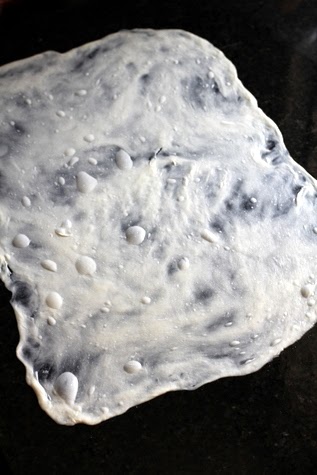
Rolled out parottas ready to be fried